

Breathing Problems: Common Causes, Symptoms and Treatment Options
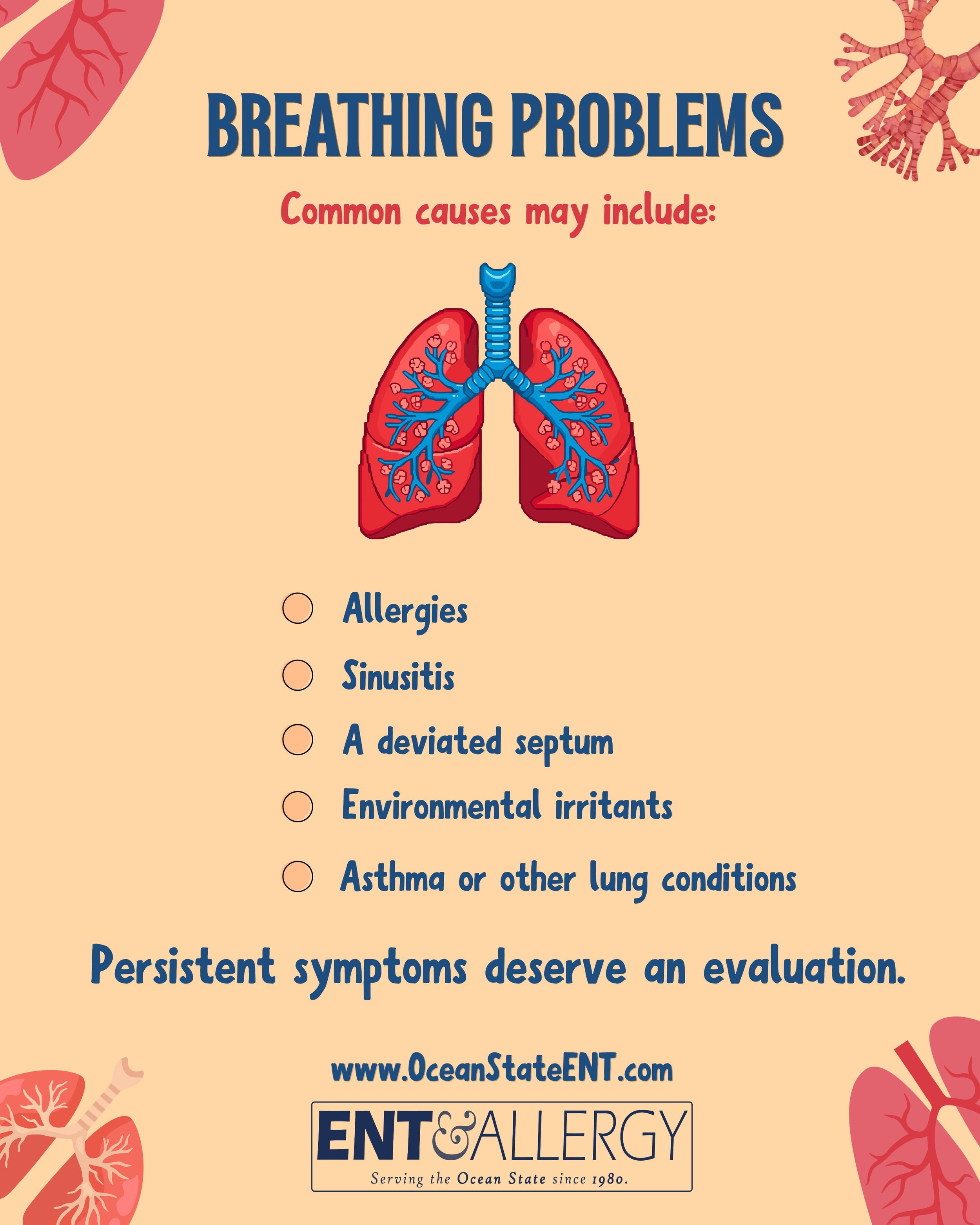
Breathing should feel natural and effortless. When nasal congestion, facial pressure, wheezing or shortness of breath makes it difficult to breathe comfortably, identifying the underlying cause is an important first step toward relief.
The nose plays an essential role in healthy breathing. Before air reaches the lungs, the nose helps warm, humidify and filter it. Tiny hairs and mucus inside the nasal passages trap dust, pollen and other airborne particles, while the nasal tissues add warmth and moisture to help protect the lower airways.
Breathing problems can occur when inflammation, infection, structural narrowing or lung disease interferes with normal airflow. Symptoms may be temporary, such as congestion from a cold, or chronic, lasting several weeks or repeatedly returning. Some conditions primarily affect airflow through the nose, while others affect the lungs or both parts of the respiratory system.
Common Symptoms of a Breathing Problem
Depending on the cause, symptoms may include:
Persistent nasal congestion
Difficulty breathing through one or both sides of the nose
Frequent mouth breathing
Facial pain or pressure
Postnasal drip
Reduced sense of smell or taste
Snoring or disrupted sleep
Coughing or wheezing
Chest tightness
Shortness of breath during activity
Frequent sinus infections
Headaches
Fatigue or difficulty concentrating
Because several conditions can produce similar symptoms, an evaluation can help determine whether the problem begins in the nose and sinuses, the lungs or another part of the airway.
How Breathing Problems Are Evaluated
Your doctor will usually begin by asking when the symptoms started, how often they occur and whether they are associated with certain seasons, environments, activities or exposures. A physical examination may include looking inside the nose, listening to the lungs and checking for inflammation, drainage or structural abnormalities.
Depending on your symptoms, additional testing may include:
Allergy testing: Skin or blood testing may help identify environmental allergens that trigger symptoms.
Nasal endoscopy: A thin, lighted instrument allows an ENT specialist to examine areas deeper inside the nasal passages and sinus openings.
Spirometry: This breathing test measures how much air you can exhale and how quickly you can exhale it. It is frequently used when asthma or chronic obstructive pulmonary disease is suspected.
Imaging: A CT scan may be recommended when chronic sinus disease, nasal polyps or another structural issue is suspected. Imaging is not necessary for every patient with congestion or sinus symptoms.
Additional pulmonary testing: Patients with symptoms involving the lungs may be referred for further respiratory evaluation.
Allergies and Allergic Rhinitis
Allergic rhinitis develops when the immune system overreacts to a substance that is normally harmless. Common triggers include pollen, dust mites, mold spores, pet dander and certain workplace or environmental exposures.
When an allergic reaction occurs, the body releases chemicals such as histamine. This can lead to:
Sneezing
A runny or stuffy nose
Itchy or watery eyes
Postnasal drip
An itchy nose, mouth or throat
Coughing
Headaches or facial pressure
Fatigue
Symptoms may appear seasonally or continue throughout the year, depending on the trigger.
Treatment may include reducing exposure to known allergens, using saline nasal rinses and taking medications such as antihistamines or corticosteroid nasal sprays. Decongestants may offer short-term relief for some patients, but they are not appropriate for everyone. Decongestant nasal sprays can cause worsening congestion when used longer than directed.
When symptoms remain difficult to control, allergy immunotherapy may be recommended. Immunotherapy gradually exposes the immune system to carefully measured amounts of an allergen, helping reduce sensitivity over time.
Deviated Septum and Structural Nasal Blockage
The nasal septum is the wall of cartilage and bone that separates the left and right sides of the nose. When it is significantly crooked or displaced, it is known as a deviated septum.
Some people are born with a deviated septum, while others develop one following an injury. A mild deviation may not cause symptoms. A more significant deviation can contribute to:
Difficulty breathing through one side of the nose
Chronic congestion
Frequent nosebleeds
Snoring
Dry mouth from mouth breathing
Disrupted sleep
Recurrent sinus problems
Medication may help reduce swelling in the nasal passages, but it cannot straighten the septum itself. If symptoms are persistent and interfere with breathing or quality of life, a procedure called septoplasty may be recommended. Septoplasty is generally performed as an outpatient procedure and repositions the septum to improve airflow.
Other structural causes of nasal blockage may include enlarged turbinates, nasal polyps, nasal valve collapse or, less commonly, a growth inside the nasal cavity.
Environmental Irritants
Not every nasal reaction is caused by a true allergy. Smoke, strong fragrances, cleaning products, air pollution, temperature changes and very dry air can irritate the nasal passages and cause congestion, drainage or coughing.
Common environmental triggers include:
Mold
Dust and dust mites
Cigarette smoke and secondhand smoke
Wildfire smoke
Strong perfumes or chemical odors
Workplace fumes
Dry indoor air
Sudden changes in temperature or humidity
Reducing exposure is an important part of treatment. Helpful measures may include correcting sources of moisture and mold, washing bedding regularly, using an appropriately maintained humidifier, improving indoor ventilation and avoiding tobacco smoke.
An evaluation can help distinguish allergic rhinitis from nonallergic irritation because treatment may differ.
Sinusitis
Sinusitis, also called rhinosinusitis, occurs when the tissues lining the nasal passages and sinuses become inflamed. The sinuses are air-filled spaces located around the nose, cheeks, eyes and forehead.
Symptoms may include:
Nasal congestion
Facial pain or pressure
Thick nasal drainage
Postnasal drip
Reduced sense of smell
Headache
Cough
Bad breath
Ear pressure
Fatigue
Acute sinusitis often develops after a viral upper respiratory infection and usually improves with time and supportive care. Antibiotics do not treat viral infections and are not needed for every case of sinusitis.
Chronic sinusitis is generally characterized by symptoms that persist for 12 weeks or longer. Treatment may include saline irrigation, corticosteroid nasal sprays, allergy management or other medications based on the cause. When symptoms continue despite appropriate medical treatment, an ENT specialist may discuss additional options, including sinus surgery.
Asthma and Other Lung Conditions
Some breathing difficulties begin lower in the respiratory system rather than in the nose or sinuses.
Asthma is a chronic condition in which the airways become inflamed and narrow. Common symptoms include wheezing, coughing, chest tightness and shortness of breath. Symptoms may be triggered by allergens, exercise, respiratory infections, cold air, smoke or other irritants. Spirometry can help assess lung function and may be used before and after medication to determine whether airflow improves.
Chronic obstructive pulmonary disease, or COPD, is a group of progressive lung diseases that includes emphysema and chronic bronchitis. Symptoms can include frequent coughing, excess mucus, wheezing, difficulty taking a deep breath and shortness of breath during ordinary activities. Cigarette smoking is the leading cause, although nonsmokers can also develop COPD following certain environmental, occupational or genetic risks.
Patients whose symptoms suggest asthma, COPD or another lung condition may need evaluation and treatment from a primary care provider, allergist or pulmonologist in addition to ENT care.
When Should You See an ENT Specialist?
Consider scheduling an evaluation if you experience:
Nasal congestion that lasts several weeks
Difficulty breathing through one or both sides of the nose
Recurrent sinus infections
Facial pressure that repeatedly returns
Persistent mouth breathing
Reduced sense of smell
Chronic postnasal drip
Frequent nosebleeds
Snoring or sleep disruption
Symptoms that do not improve with appropriate over-the-counter treatment
Seek immediate medical attention for severe or sudden shortness of breath, blue or gray lips, chest pain, confusion, fainting, significant swelling of the face or throat, or difficulty speaking because of breathlessness.
Find the Cause of Your Breathing Problems
Persistent breathing difficulties should not simply be accepted as a normal part of life. Allergies, chronic sinus inflammation, a deviated septum and environmental irritation are common, but treatment depends on identifying the source of the problem.
If you are experiencing ongoing nasal congestion, sinus pressure or difficulty breathing through your nose, contact our office to schedule an appointment with one of our otolaryngologists. A thorough evaluation can help identify the cause and determine the most appropriate path toward clearer, more comfortable breathing.