

Can Fall Allergies Make Your Ears Feel Clogged?
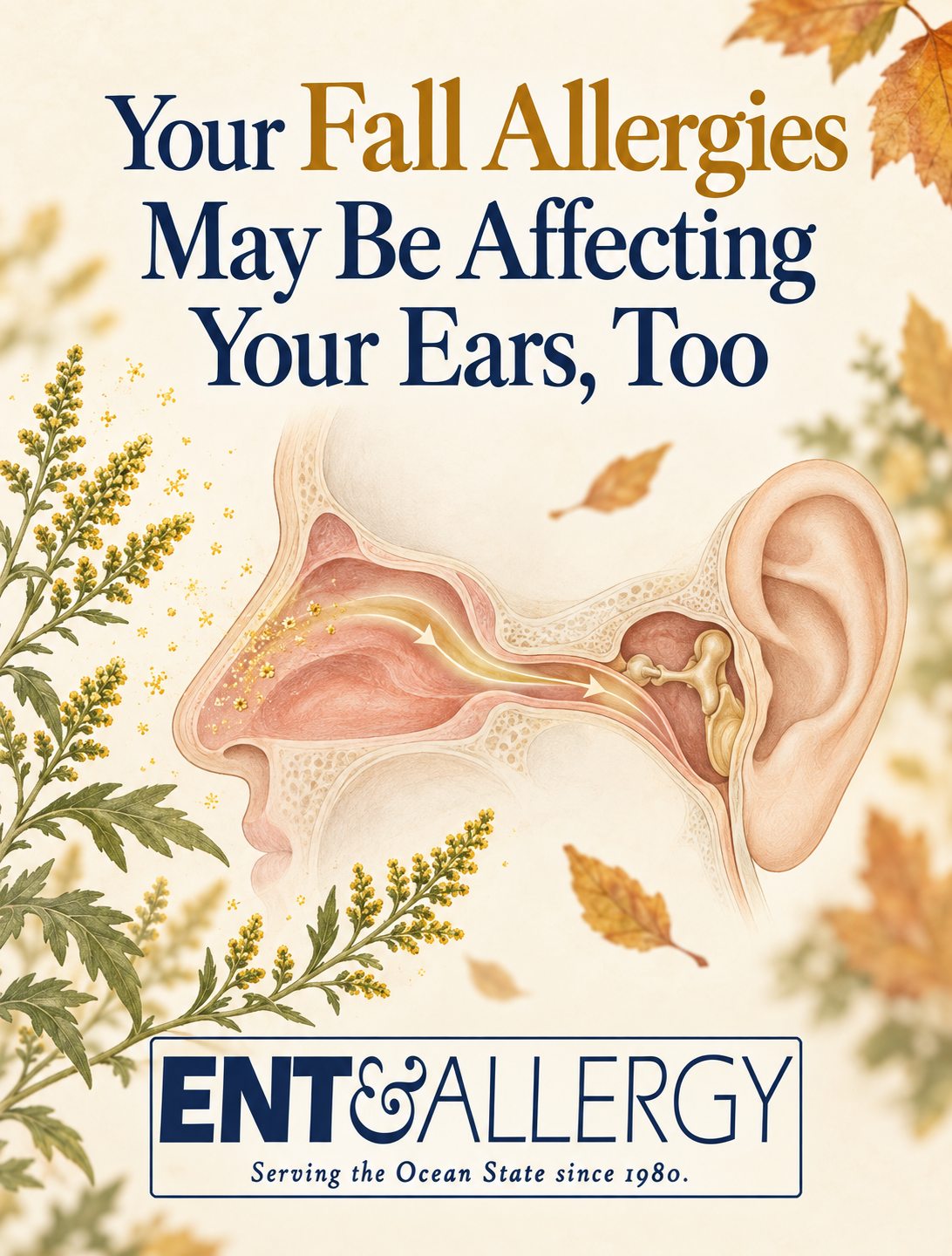
Fall allergies are usually associated with sneezing, congestion, itchy eyes and a runny nose. But for some people, the first sign of seasonal allergies is not in the nose at all. It is a feeling of pressure or fullness in the ears.
If your ears feel clogged, sounds seem muffled or you keep trying to make your ears “pop,” inflammation caused by allergies may be affecting your Eustachian tubes. These small passageways connect the middle ears to the back of the nose and help the ears function normally.
Although allergy-related ear pressure is often temporary, similar symptoms can also be caused by earwax, fluid behind the eardrum, an ear infection and other conditions. Understanding the connection between the nose and ears can help you recognize when seasonal symptoms may be responsible and when it is time to schedule an evaluation.
What Are the Eustachian Tubes?
The Eustachian tubes are narrow passageways that connect each middle ear to the area behind the nose and upper throat. Most of the time, these tubes remain closed. They briefly open when you swallow, yawn or chew.
The Eustachian tubes have several important jobs:
Equalizing air pressure on both sides of the eardrum
Allowing fluid to drain from the middle ear
Helping protect the middle ear from nasal drainage and pressure changes
You may notice these tubes working when your ears pop during an airplane flight, while driving through changing elevations or after swallowing. When a Eustachian tube does not open and close properly, pressure may build behind the eardrum. This is called Eustachian tube dysfunction, or ETD.
How Can Fall Allergies Affect the Ears?
Seasonal allergies occur when the immune system reacts to an airborne substance such as pollen or mold. During the fall, common triggers may include ragweed pollen and outdoor mold spores. Exposure can cause inflammation in the lining of the nose and the surrounding tissues.
Because the openings of the Eustachian tubes are located behind the nose, nasal inflammation and congestion can interfere with their ability to open normally. When the tubes become obstructed, the middle ears may not be able to equalize pressure or drain fluid as effectively.
This can create the familiar sensation of clogged or “underwater” ears. Symptoms may affect one or both ears and may come and go along with nasal congestion.
Symptoms of Allergy-Related Eustachian Tube Dysfunction
Possible symptoms include:
Pressure or fullness in one or both ears
Popping, clicking or crackling sounds
Muffled or reduced hearing
Mild ear discomfort
A sensation that the ears need to open or pop
Difficulty equalizing pressure during air travel
Ringing in the ears in some cases
Fluid behind the eardrum
Some people notice that their ear symptoms become worse on days when their nasal allergy symptoms are most active. Others may experience ear pressure after a cold or sinus infection, which can cause inflammation in the same area.
Does Ear Pressure Mean You Have an Ear Infection?
Not necessarily. Ear pressure and muffled hearing can occur without an active infection.
An ear infection may be accompanied by increasing pain, fever, drainage from the ear or significant changes in hearing. Eustachian tube dysfunction often feels more like pressure, fullness, popping or temporary muffling. However, symptoms can overlap, and it is not always possible to determine the cause without examining the ear.
Other possible causes of a clogged-ear sensation include:
Earwax buildup
Fluid behind the eardrum
A recent cold or respiratory infection
Sinus inflammation
Changes in altitude or air pressure
Temporomandibular joint, or TMJ, problems
Sudden or gradual hearing loss
Less common disorders affecting the middle or inner ear
If symptoms are persistent, painful or limited primarily to one ear, a medical evaluation can help identify the cause.
Why Do Symptoms Feel Worse on an Airplane?
During takeoff and landing, the air pressure around you changes more quickly than the pressure inside the middle ear. Healthy Eustachian tubes open to equalize that pressure. If allergies or congestion have made the tubes swollen or obstructed, they may have difficulty adjusting.
This can cause increased pressure, pain, muffled hearing or a sensation that the ear will not pop. Swallowing, yawning or chewing may help the tubes open, but avoid repeatedly or forcefully trying to pop your ears. If you regularly experience significant ear pain during flights, speak with a healthcare provider before traveling about safe ways to manage your symptoms.
What Can Help Relieve Clogged Ears During Allergy Season?
The appropriate treatment depends on what is causing the pressure. Not every clogged ear is caused by allergies, and not every type of Eustachian tube dysfunction should be treated in the same way.
For mild symptoms, the following measures may help:
Reduce exposure to allergy triggers
Check local pollen conditions, keep windows closed on high-pollen days and change clothes after spending time outdoors. Showering and washing your hair before bed can help prevent pollen from being transferred to pillows and bedding.
Swallow, yawn or chew gum
These natural movements can encourage the Eustachian tubes to open and may temporarily relieve mild pressure.
Stay hydrated
Drinking enough water can help keep mucus thinner and may support normal drainage.
Consider saline nasal spray
A saline spray may help rinse allergens and mucus from the nasal passages. Use products according to their instructions, and ask a healthcare provider if you are uncertain whether a product is appropriate for you.
Discuss allergy treatment with a healthcare provider
Depending on your symptoms and medical history, a clinician may recommend an antihistamine, medicated nasal spray or another form of allergy treatment. Do not assume that a decongestant is the right solution. Some medications are not appropriate for everyone, and certain products may make some forms of Eustachian tube dysfunction worse.
Avoid inserting objects into the ear
Cotton swabs and other objects do not treat pressure behind the eardrum and can push earwax deeper, injure the ear canal or damage the eardrum.
When Should You See an ENT Specialist?
Occasional mild pressure may improve as nasal congestion settles. An evaluation is appropriate when symptoms:
Last longer than a week or two
Keep returning
Cause significant pain
Interfere with hearing, sleep, work or school
Occur mainly in one ear
Are accompanied by drainage from the ear
Develop with dizziness, ringing or balance problems
Become worse instead of improving
Sudden hearing loss should be treated as an urgent medical concern, especially when it affects one ear. Do not assume that a sudden change in hearing is simply congestion or earwax.
How Is Eustachian Tube Dysfunction Evaluated?
An ENT specialist may examine the ear canals, eardrums, nasal passages and throat. The evaluation may also include questions about seasonal patterns, recent respiratory infections, air travel, allergy symptoms and changes in hearing.
Depending on the symptoms, additional testing may include:
Tympanometry, which measures how the eardrum and middle ear respond to changes in pressure
A hearing test, which can identify whether hearing has changed and help determine the type of hearing loss
Nasal examination or endoscopy, which may be used to look for inflammation or other causes of obstruction
Allergy evaluation, when environmental allergies appear to be contributing to recurring symptoms
Treatment is based on the underlying cause rather than the sensation of pressure alone. Some cases improve when nasal inflammation is controlled. Persistent or structural problems may require other treatment options, which an ENT specialist can discuss after an examination.
The Connection Between Your Nose and Ears
The ears, nose and throat are closely connected. That is why inflammation that begins with seasonal allergies can sometimes cause symptoms that seem unrelated, including ear pressure, popping and muffled hearing.
If your ears regularly feel clogged during fall allergy season, you do not have to simply wait for the season to end. Identifying whether the problem is caused by allergies, Eustachian tube dysfunction, fluid, earwax or another condition is the first step toward finding the right treatment.
If ear pressure is persistent, painful or affecting your hearing, contact ENT & Allergy, Inc. to schedule an evaluation.