

Pet Allergies in Small Homes: Practical Steps That Actually Help
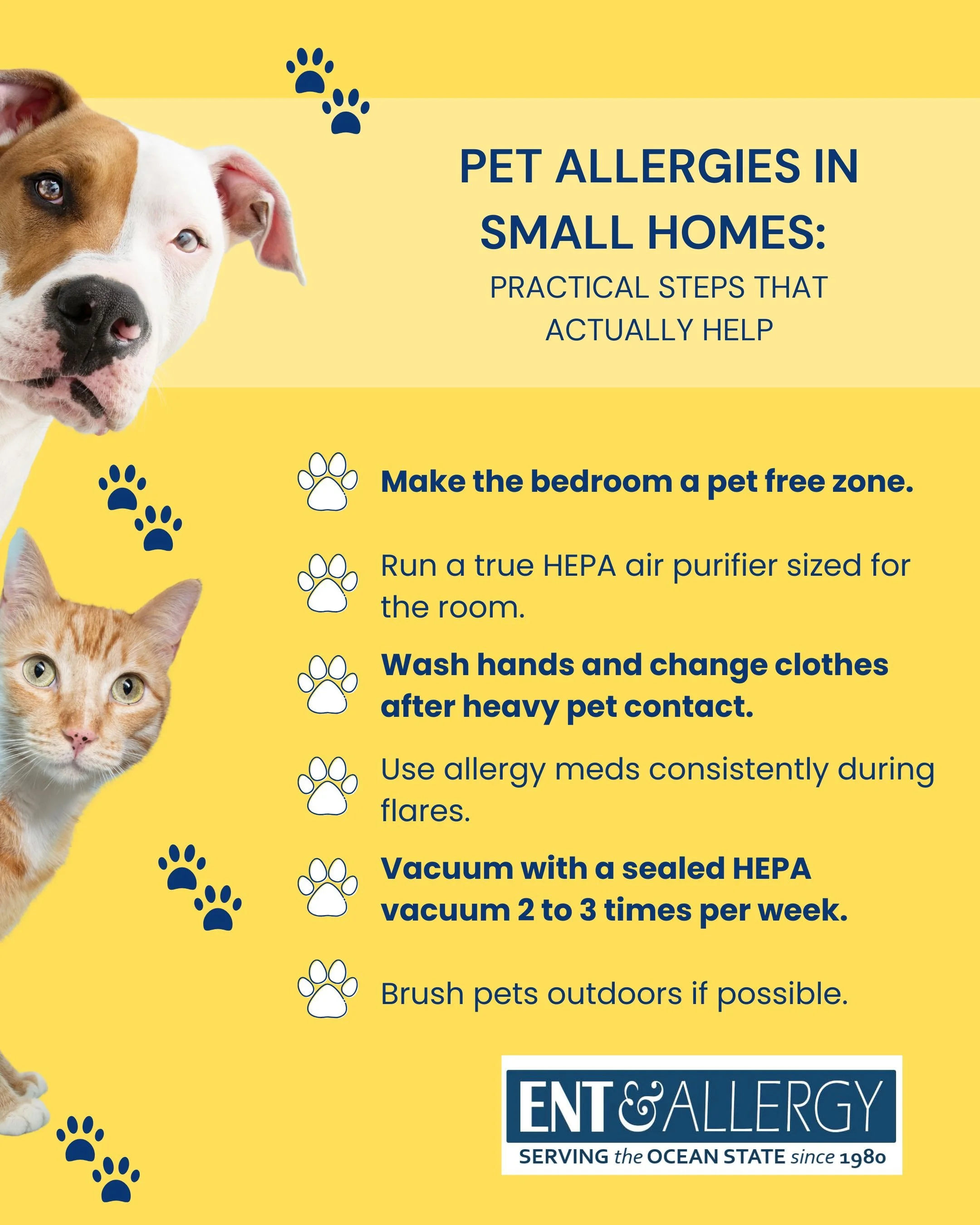
Living with a pet in a smaller space can feel like your allergies have nowhere to hide. When square footage is limited, dander and allergens build up faster, float around longer, and hitch rides on clothes and bedding more easily. The good news is you do not need a perfect home or a massive budget to feel better. You need a few high impact changes done consistently.
Below are practical steps, ordered by what usually moves the needle most in a small home.
The biggest wins (start here)
1) Make the bedroom a pet free zone
If you only do one thing, do this.
Your bedroom is where you spend the most uninterrupted hours breathing the same air, with your face in pillows and sheets that trap allergens. Keeping pets out gives your immune system a daily break.
How to set it up
Keep the door closed
No pet beds, blankets, or toys in the room
If your pet currently sleeps with you, transition gradually with a cozy bed outside the bedroom door and a consistent routine
2) Run a true HEPA air purifier sized for the room
A real HEPA purifier can reduce airborne particles that trigger symptoms, especially in a closed bedroom.
Best practice
Start with the bedroom first
Keep it running 24/7 on a low setting
Turn it up when you are home, cleaning, or after brushing your pet
Replace filters on schedule (late filter changes quietly reduce performance)
3) Wash hands and change clothes after heavy pet contact
In a small home, allergens ride on clothing and end up on the couch, in your bed, and on your pillow. The “I was just cuddling for a minute” moments add up.
Simple rule
After long pet snuggles, brushing, or playtime: wash hands and swap your top layer before bed
4) Use allergy meds consistently during flares
Many people under-dose by taking meds only “as needed.” During bad weeks, consistency usually beats occasional use.
A practical approach
During flare weeks: take a daily non drowsy antihistamine
If symptoms are mainly nasal congestion: consider adding a daily nasal steroid spray (more on that below)
Cleaning that actually helps (without living in cleaning mode)
Vacuum with a sealed HEPA vacuum 2 to 3 times per week
Regular vacuums can blow allergens back into the air. A sealed HEPA vacuum is designed to trap them.
Small home tip: focus on high traffic zones and the pet’s favorite spots.
Damp dust hard surfaces 1 to 2 times per week
Dry dusting can kick allergens back into the air. Damp dusting captures them.
Wash pet bedding weekly
Use hot water if the fabric allows. Pet beds can be a major allergen reservoir.
Wash your bedding weekly
Sheets and pillowcases collect allergens quickly. Hot water may help if your bedding tolerates it.
Reduce “allergen reservoirs” (the hidden storage bins for dander)
Rethink rugs, especially in the bedroom
Rugs trap allergens and release them with every step.
If possible, remove rugs in the bedroom
If you cannot: choose low pile and vacuum frequently
Use allergen encasements for pillows and mattress
Zippered covers help block allergens from embedding in bedding and pillows.
Keep pets off upholstered furniture, or use washable covers
Upholstery holds allergens longer than hard surfaces.
Easy workaround
Use washable couch covers and wash weekly
If your pet has a favorite spot, cover just that section first
Pet focused steps (reduce dander at the source)
Bathing or wiping can help
Frequency depends on the pet and what your vet recommends. Even pet safe wipes a few times per week can reduce dander load.
Brush strategically
Brush outdoors if possible
If indoors: pick one easy to clean area
Vacuum afterward
Humidity and ventilation (often overlooked, surprisingly effective)
Keep indoor humidity around 40 to 50%
Too high can increase dust mites and mold. Too low can irritate noses and make symptoms feel worse.
Quick win
Use an inexpensive hygrometer to know where you stand
Ventilate during cleaning and after brushing
Crack a window or run exhaust fans to clear airborne particles during the highest exposure moments.
Meds and treatment options that can make a real difference
Intranasal steroid spray (daily) is often the congestion winner
For stuffed nose and postnasal drip, a daily nasal steroid spray is often more effective than antihistamines alone.
Technique matters
Aim slightly outward toward the ear, not straight up
Use it daily during flares, not just once in a while
Allergy testing can clarify the real trigger
Sometimes the “pet allergy” is actually dust mites, mold, or a mix. Testing helps you focus your effort where it matters most.
Immunotherapy can reduce sensitivity over time
Allergy shots, and sometimes drops depending on the practice, can reduce symptoms when avoidance is not realistic.
Quick “small home” setup (simple and doable)
Bedroom
Pet free
HEPA purifier
Encase pillow and mattress
Living area
Sealed HEPA vacuum
Washable couch cover
Purifier if budget allows
Routine
Weekly bedding wash
Weekly pet bed wash
Damp dust
Vacuum 2 to 3 times per week
When it is time to see an ENT or allergist
Consider an appointment if you have:
Symptoms more than 2 to 3 months a year
Frequent sinus infections
Wheezing, nighttime cough, or mouth breathing and poor sleep
Meds not controlling symptoms
Reliance on decongestant sprays
A final note on expectations
In a small home, the goal is not perfection. It is lowering the overall allergen load enough that your body stops reacting all day, every day. Start with the bedroom rule and a real HEPA purifier, then build from there.